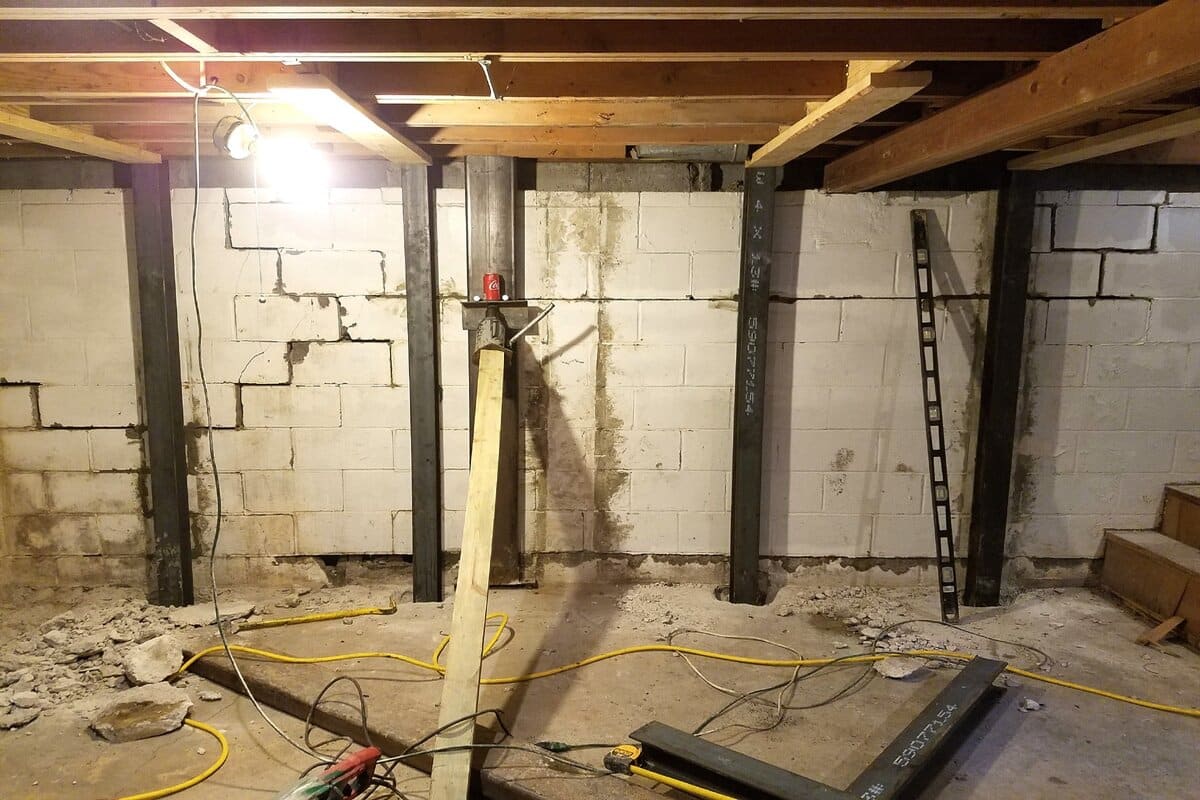
Foundation issues often show up as cracks in walls or doors that no longer close the way they should. These signs clearly point to problems that need real structural support. That’s why we often recommend a helical pier foundation to stabilize and protect structures.
In many cases, helical piers work best on lighter additions, such as patios or sunrooms, where heavy push piers could cause damage. Instead of adding extra pressure to the building, they install with minimal impact on the structure itself. In this guide, we first explain how helical piers work, then cover when they’re the right choice, and finally outline what to expect during installation.
What is a Helical Pier Foundation?
A helical pier is a long steel shaft with corkscrew-shaped plates at the end. These plates twist deep into the soil until they reach a level that can carry the load above. Once secure, a top bracket transfers the weight of the structure onto the pier.
Key points about helical piers:
- Best for lighter structures like sunrooms or patios built on thin slabs
- Do not depend on the weight of the building
- Can be installed outside and sometimes inside
Pro Tip: A push pier on a light structure can cause new damage. Helical piers avoid this problem by working independently of the building’s weight.
When Should You Use a Helical Pier Foundation?
Helical piers are a smart choice when a structure lacks footings. A sunroom built over a thin patio slab is a common example. Without proper support, the slab may shift. Helical piers provide a strong base that solves the problem.
Advantages of Helical Piers
- Quick and simple installation
- Can be used in small areas
- Provide immediate strength once in place
Challenges to Keep in Mind
When drainage problems make the soil too wet, the pier can shift over time. Soil that installers disturb during installation can soften and cause sinking. You need to correct drainage and grading problems to make the repair last long-term.
How Invasive is Helical Pier Installation?
Helical pier installation requires digging, but it’s not extreme. The process is much like installing a push pier. The main difference is that interior installs are harder. Tight spaces make the work more complex, and in those cases, a push pier may be the better choice.
Key Takeaway: Helical piers work best outside on lighter projects. For heavier homes or basement walls, push piers are often a better fit.
Cost Factors of Helical Piers
The price depends on three main things:
- Soil type: Softer soil may need deeper piers.
- Load size: Bigger or heavier structures need more support.
- Access: Tight or interior installs cost more in labor.
More depth or more piers usually means a higher cost. Each project is unique, and pricing reflects the site conditions.
Need expert help with a helical pier foundation? Contact Foundation 1 for a free consultation.
Why Helical Piers Are Trusted
Helical piers are valued because they do not rely on the weight of the building. They give steady support without harming lighter structures. With good grading and drainage, they are a long-lasting solution.
In Summary
A helical pier foundation is a reliable way to support sunrooms, patios, or other light additions. It installs fast and offers strong, lasting results, as long as the soil is managed correctly.
At Foundation 1, we install helical piers the right way and make sure drainage issues are handled. Contact us today for a free consultation and learn how we can protect your foundation.