Piers and footings are both parts of a home’s foundation, and each one supports the structure in a different way. The difference determines how each one can fail and which repair a Kansas City home may need.
Footings spread your home’s weight across the soil near the surface. Piers carry that weight down to stable ground. Our team explains how each one works, why footings fail in KC, and how to tell what your home needs.
Piers vs Footings at a Glance
| Feature | Footing | Pier |
| Main job | Spreads weight outward across the soil | Carries weight down to stable soil or bedrock |
| Depth | Shallow, just below the frost line | Deep, down to load-bearing soil |
| Materials | Poured concrete, usually with rebar | Steel tubes, helical shafts, or concrete |
| Installation | Digging, forming, and pouring a wide base | Driving or screwing shafts into the ground |
| Best soil | Firm, stable, well-drained soil | Soft, expansive, or shifting soil |
| Common use | Nearly every home and addition | Poor-soil builds and settling homes |
Key Takeaway: Footings depend on the soil near the surface. Piers bypass that soil to reach stable ground deeper down.
What is a Footing?
A footing is the wide concrete base at the bottom of your foundation walls and support columns. It’s the part of your foundation that actually touches the soil.
How Footings Work
A footing works like a snowshoe. Spreading the load over a wider area lowers the pressure on the soil, so your home doesn’t sink. Common types include:
- Continuous (strip) footings under foundation walls
- Spread (pad) footings under columns and posts
- Thickened slab edges on slab-on-grade homes
How Deep Footings Go in Kansas City
Footings need to sit below the frost line so freezing soil can’t push them upward. Both Kansas City, Missouri, and Johnson County, Kansas require footings to sit at least 36 inches below grade. Small detached accessory structures can qualify for shallower footings, so check with your city before any new project.
Even a properly built footing depends on the soil around it. If that soil shifts, the footing moves with it.
What is a Pier?
A pier is a vertical support that transfers your home’s weight past weak upper soil to deeper, load-bearing strata or bedrock. For foundation repair, our crews install two main types.
Steel Push Piers
Push piers are steel tubes driven hydraulically into the ground, using the weight of the house as resistance. They suit heavier homes and are the type we prefer for most repairs. Learn more about our basement piers.
Helical Piers
Helical piers have screw-like plates welded to a steel shaft. They’re turned into the soil while installers monitor torque, which is used to verify load capacity. They work well for lighter structures, new construction, and additions, and where other repair methods aren’t practical. See our helical piers page for details.
Pro Tip: “Pier,” “pile,” and “pier-and-beam” get mixed up often. If a contractor recommends piering, ask which system they plan to use, how deep it will go, and why it fits your home.
How Piers and Footings Work Together Under Your Home
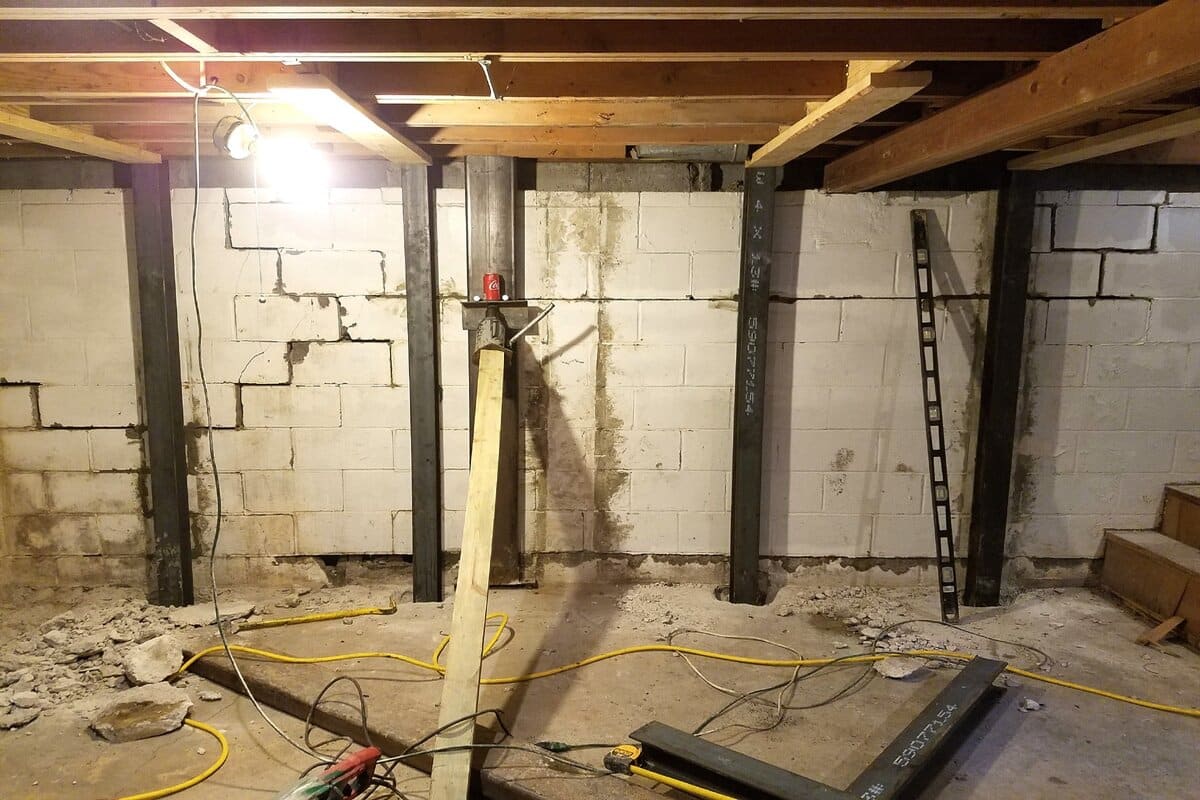
For an existing home, the choice is rarely one or the other. When footings settle, piers are installed beneath them to carry the load. This process is called underpinning.
What Underpinning Involves
- Our evaluator determines where your home needs piers.
- We excavate a small area at each location.
- Each pier is placed directly under the load and pushed down until it reaches bedrock or stable, load-bearing strata.
- Your home’s weight shifts from the unstable soil to the piers.
The Stratos pier system we use installs with no brackets, no bolts, and no breaking the footing, so the footing stays intact.
Can Piers Lift a Settled Home?
In most cases, yes. Once the piers are set, they can lift the home back toward level. Some homes can’t be lifted, and stopping further settlement is still a successful repair. We’ll tell you upfront what’s realistic.
Why Footings Fail in Kansas City
Most foundation problems we see across the metro trace back to soil and water.
Expansive Clay Soil
Much of KC sits on expansive clay that swells when wet and shrinks when dry. Wet springs and dry summers keep that soil moving, which pulls support out from under footings.
Freeze-Thaw Cycles
Shallow footings and loosely compacted fill soil can heave in winter and settle again in spring.
Poor Drainage
Overflowing gutters, short downspouts, and soil sloping toward the house soak the ground right where your footings sit.
Pro Tip: We recommend discharging downspouts at least 10 feet from your foundation. Splash blocks at the base of a downspout aren’t enough on their own. Our gutter installation and drainage teams can help.
Signs Your Footings Need Pier Support
Watch for these common warning signs:
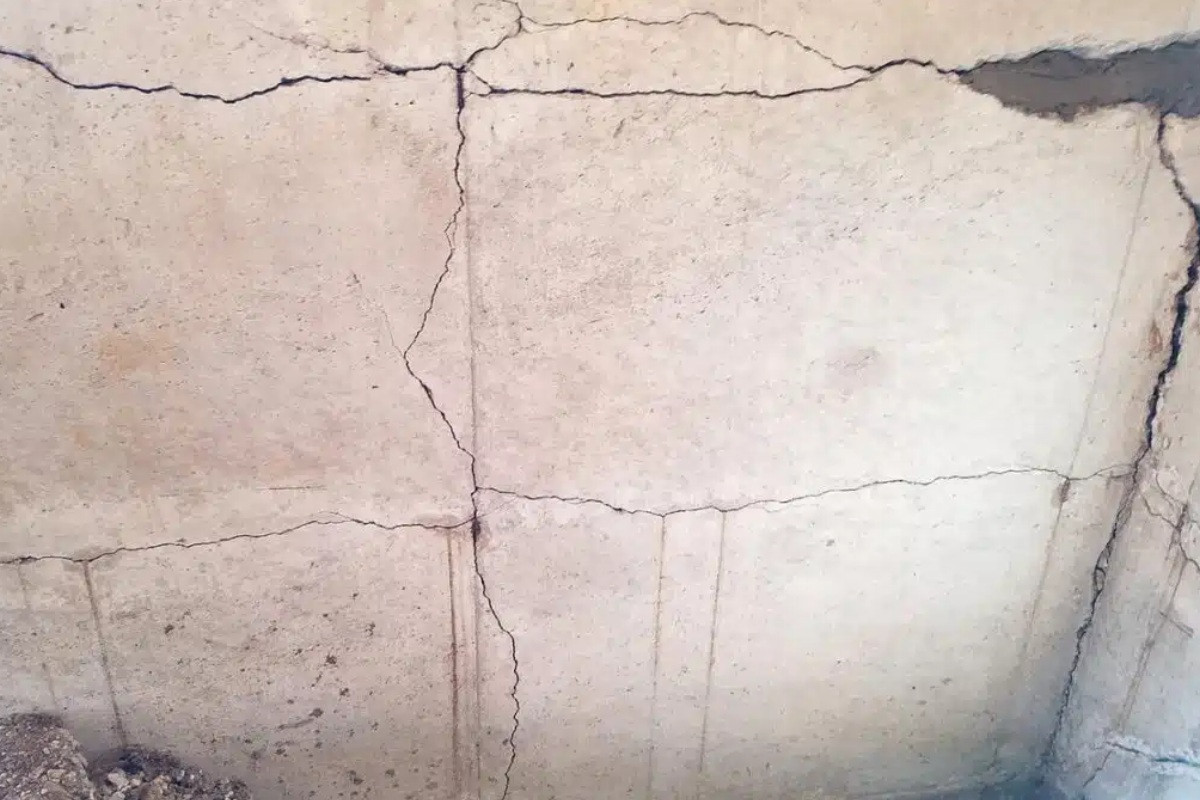
- Vertical or stair-step cracks in brick, block, or drywall
- Doors and windows that stick or won’t latch
- Sloping or uneven floors
- Gaps around window frames or where walls meet ceilings
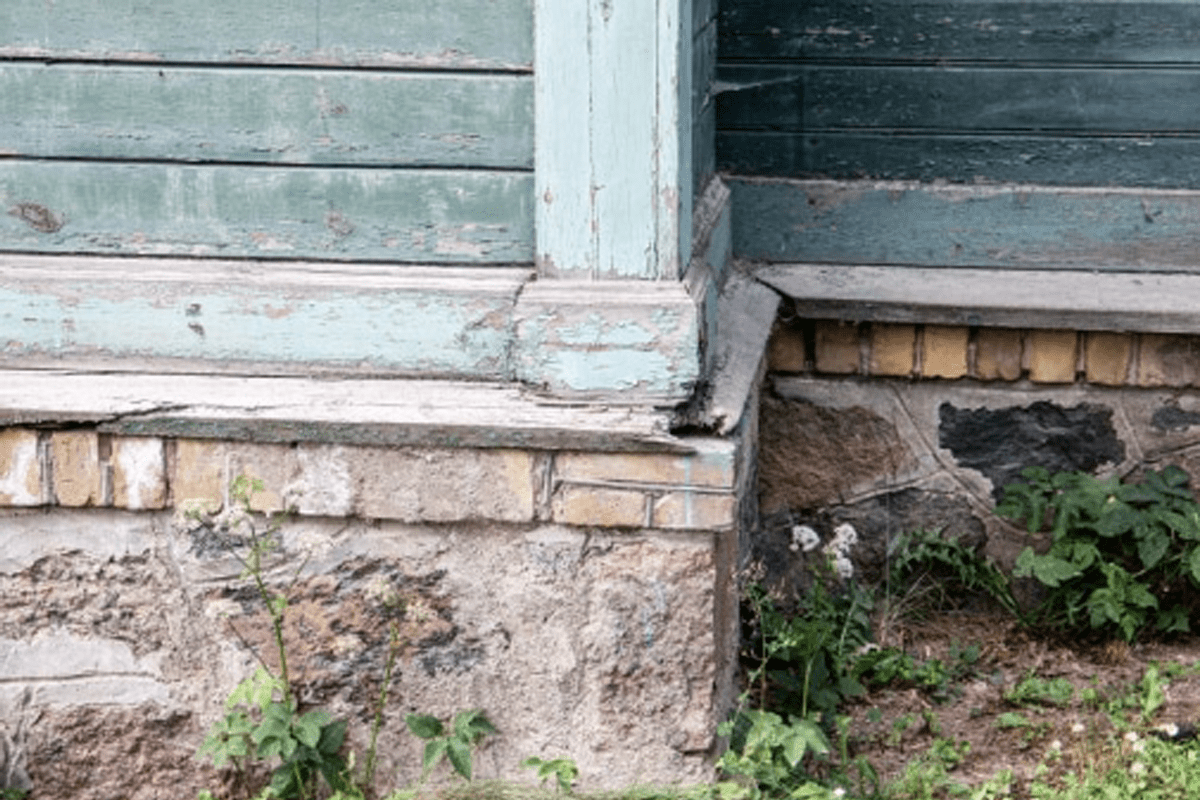
- A chimney or porch pulling away from the house
Need expert help with a settling foundation? Contact Foundation 1 for a free inspection.
Which Does Your Project Need?
Piers and Footings for Decks, Additions, and Sheds
On firm, stable soil, standard footings are usually enough for new construction. Sloped lots and soft or expansive soil may call for helical piers, which can be installed before the structure is built. A structural engineer can confirm based on your soil conditions.
Repairs for a Settling Home
Pouring new footings won’t stop an existing home from sinking. The right fix starts with finding the cause. Our engineer-certified evaluators take elevation readings, check soil conditions and water intrusion, and lay out more than one repair option when the home allows. You can review typical costs on our foundation repair pricing page.
Key Takeaway: Footings handle new work on stable sites. Piers solve settlement in existing homes and support new work on poor soil.
Get a Clear Answer From a Local Team
Our team has been working on Kansas City foundations since 2001. We stand behind our repairs with strong warranties, including lifetime warranties on push and helical piers. Your proposal spells out the exact coverage for your project, and we offer financing to make repairs more manageable.
If you’re noticing cracks, sloping floors, or sticking doors, contact our team to schedule your free inspection. We’ll show you exactly what’s happening below your home and how the right combination of piers and footings can keep it stable for decades.