A new crack in the basement wall is a common reason Kansas City homeowners reach out to us. Many cracks are cosmetic and stay the same size for years. Others can signal that part of the foundation is settling into soft soil and may need foundation piers to stop the movement.
Why Kansas City Homes Settle
Much of the settlement we see in the metro traces back to two local conditions.
Expansive Clay Soil
Many parts of the Kansas City area sit on clay that swells when wet and shrinks during dry spells. That cycle can pull support out from under footings, often unevenly. When one corner drops faster than the rest of the house, engineers call it differential settlement.
Poor Drainage and Freeze-Thaw Cycles
Short downspouts, clogged gutters, and yards that slope toward the house can soak the soil beside your foundation. Winter freezes and thaws then cause that soil to heave and soften over time. Older homes with stone or block foundations often show the effects sooner.
Pro Tip: Extend your downspouts several feet from the house and make sure the soil slopes away from your walls. These low-cost steps help keep excess water out of the soil around your foundation.
Warning Signs Your Home Needs Foundation Piers
These are the symptoms our evaluators check first. One sign alone may be minor. Several together can point to active settlement.
Stair-Step Cracks in Brick or Block
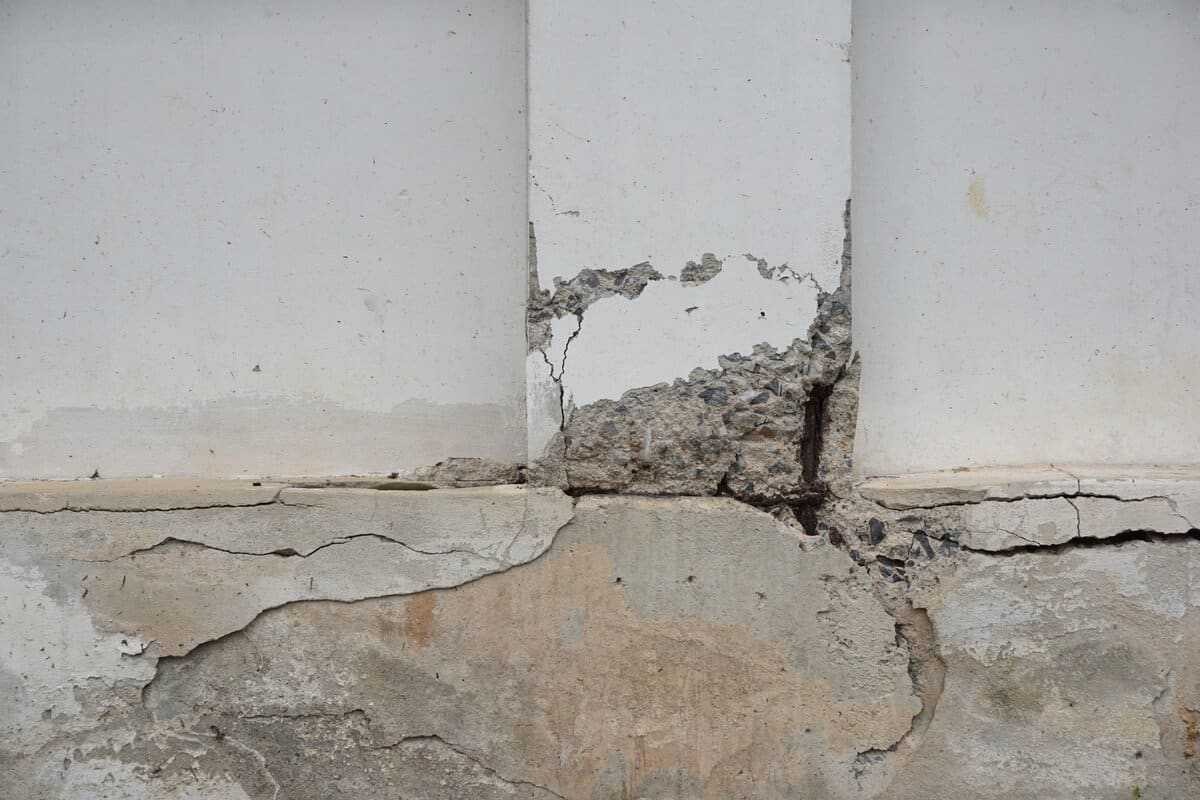
Cracks that follow mortar joints in a staircase pattern can indicate that a section of wall is dropping. Pay close attention to any crack wider than 1/4 inch or one that is wider at the top than at the bottom.
Doors and Windows That Stick
When a door suddenly drags, won’t latch, or shows a wedge-shaped gap at the top, the frame may have shifted out of square. Humidity can cause seasonal sticking, so watch for problems that persist year-round or keep getting worse.
Sloping or Uneven Floors
Set a marble on the floor or use a free level app on your phone. A steady roll toward one wall or corner can point to a settling footing on that side of the house.
Cracks and Gaps Inside the Home
Look for:
- Diagonal drywall cracks running from the corners of doors and windows
- Gaps between walls and the ceiling
- Cabinets or countertops pulling away from the wall
- Trim and baseboards separating at the corners
A Leaning Chimney or Separating Porch
Exterior chimneys and front stoops sometimes sit on shallow footings of their own. When the soil below gives way, they can tilt or pull away from the house and leave a visible gap.
Key Takeaway: Look for clusters. Cracked drywall, a sticking door, and a sloping floor on the same side of your home are worth having checked, since together they may point to settlement in that area.
Normal Settling or Something More Serious?
Every house settles a little. The goal is to tell cosmetic cracks apart from movement that keeps getting worse.
Cracks You Can Usually Monitor
Thin vertical hairline cracks under 1/16 inch are common in poured concrete walls. Many form as the concrete cures and stay the same size for years.
Cracks That Need an Inspection
Call a professional if a crack:
- Grows wider over weeks or months
- Runs horizontally or in a stair-step pattern
- Leaks water or lets in daylight
- Has one side sitting higher than the other
Pro Tip: Mark both ends of a crack with a pencil, write the date beside it, and photograph it next to a coin for scale. Check it monthly. If the crack grows past your marks, schedule an inspection.
Signs That Call for a Different Repair
Piers address vertical sinking. Some symptoms call for a different solution, and a good evaluator will tell you which one fits.
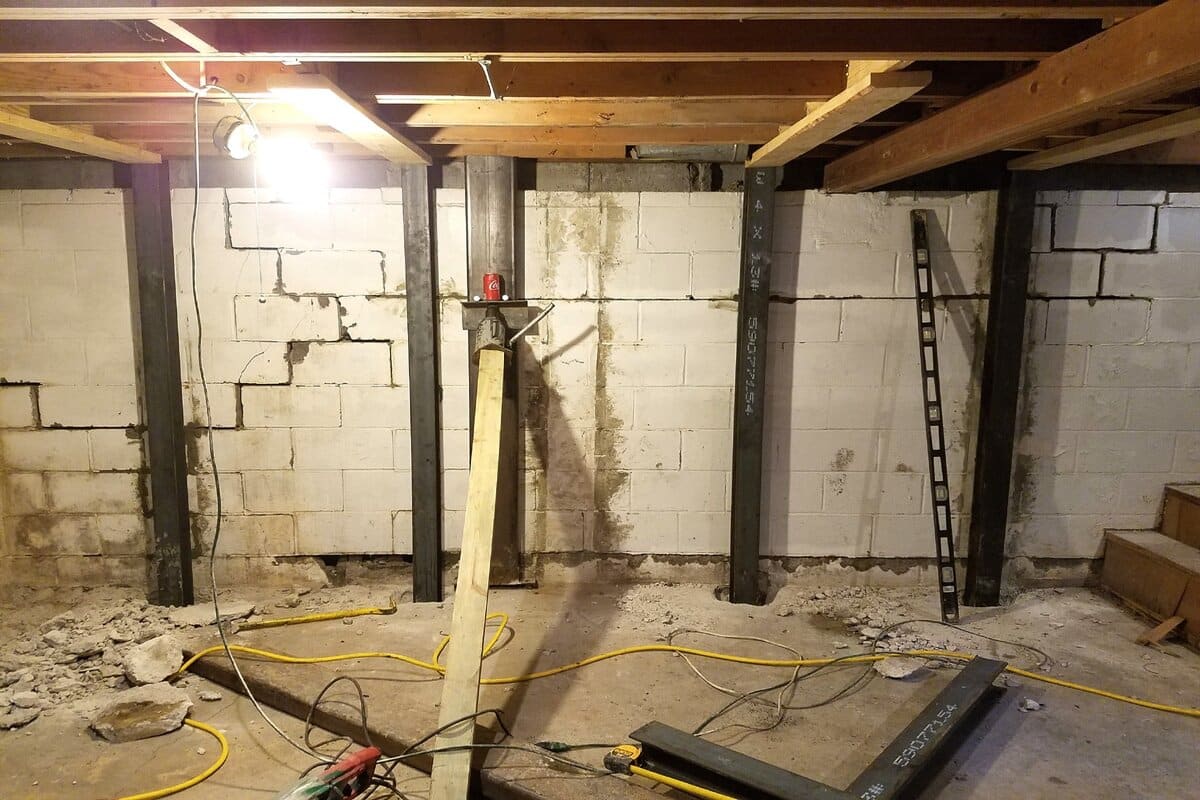
- Horizontal cracks or walls bowing inward: These are often caused by soil pressure pushing on the wall. Wall stabilization with anchors or bracing is a common fix.
- Water seepage with no movement: Waterproofing and crack sealing can often address this.
- Sunken sidewalks, patios, or driveways: Polyjacking can raise many of these slabs without tearing them out.
Push Piers and Helical Piers
We install two main pier types. The right choice depends on your soil, the weight of the structure, and how deep stable ground sits.
Steel Push Piers
Push piers are driven hydraulically through weak soil to a firm, load-bearing layer, using the home’s weight as resistance. They suit heavier homes, and in many cases they can raise settled sections closer to level. How much lift is possible depends on the structure.
Helical Piers
Helical piers have screw-shaped plates on the shaft and are turned into the ground. They work well for lighter structures such as porches and additions, which may not have enough weight to drive a push pier.
Pier Installation Costs in Kansas City
What Affects the Price
Pricing depends on:
- The number of piers your home needs
- Pier type and depth to stable soil
- Access around the foundation
- Whether the house needs lifting or stabilizing only
You can review typical ranges on our foundation repair cost page.
Paying for Foundation Piers
Waiting can make the job bigger. Cracks may widen, water can get in, and more of the foundation may need support. We offer financing and phase-based payment plans. Ask us about our lifetime transferable warranty, which can stay with the home if you sell. Coverage varies by repair.
Key Takeaway: Before comparing quotes, ask for a written plan showing pier count, placement, and warranty terms.
Need expert help with a settling foundation? Contact Foundation 1 for a free, no-pressure inspection.
What to Expect During Your Free Inspection
- Walkaround: We check the exterior for cracks, grading, and drainage problems.
- Level check: We look for areas where floors or walls have dropped.
- Interior review: We inspect doors, windows, drywall, and the basement or crawl space.
- Written plan: You get a clear explanation of what we found and our recommended repair.
Engineer-certified evaluators perform our inspections, and we work with local structural engineers when a project calls for one.
Protect Your Home Before Small Cracks Become Big Repairs
Foundation movement rarely stops on its own. Watch for stair-step cracks, sticking doors, sloping floors, and gaps that keep growing, especially when they appear together.
If you’re noticing these signs anywhere from Lee’s Summit to Overland Park, our team is ready to help. Schedule your free inspection and find out whether your home needs foundation piers.