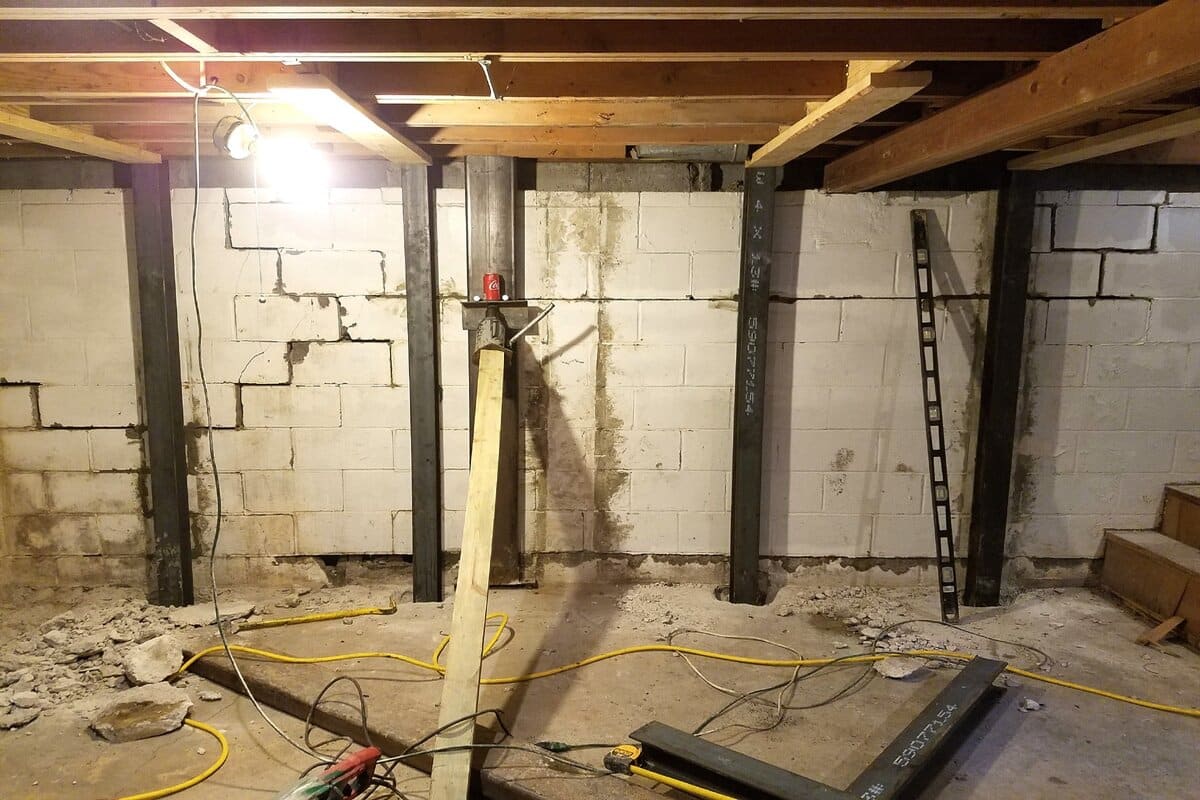
A wrong pier count can lead to a weaker repair plan. If you are asking, “How many helical piers do I need?”, the answer depends on the wall length, foundation type, and spacing required to support that section correctly. Lighter structures may allow wider spacing. Center block and stone foundations usually need piers placed closer together for a stronger result.
How Many Helical Piers Do I Actually Need?
The number of helical piers usually starts with the size of the wall being repaired. On light structures, helical piers are often installed about every 6 to 7 feet apart. That gives a starting point for estimating how many supports may be needed along the problem area.
The final number still depends on the structure in front of us. Wall length, foundation type, and the scope of repair all affect the spacing plan.
Wall Length Helps Determine the Starting Count
A longer wall usually needs more support points. If the structure is lighter, the spacing may stay closer to that 6- to 7-foot range. That helps support the wall without overbuilding the repair.
This is one reason online estimates can be misleading. Two homes may both need foundation support, but the number of piers can change a lot based on wall dimensions and structural details.
Foundation Type Changes the Layout
Not every wall should be repaired the same way. Push piers on a concrete foundation are often installed on 6-foot centers. On a center block or stone foundation, they may be installed on 4-foot centers instead.
That tighter spacing matters because of mortar joints. Those walls need more support points to help maintain their integrity during the repair.
Pro Tip: Pier spacing should be based on how the wall will carry the load, not just on how few supports can be installed.
Need expert help in determining how many helical piers you need? Contact Foundation 1 for a free consultation.
Why Closer Spacing Can Be the Better Repair
A lower pier count may sound appealing, but fewer supports are not always the right answer. On center block and stone foundations, wider spacing can increase stress on weaker sections of the wall.
That is why closer spacing often produces a better result. It helps support the structure more evenly and reduces the chance of creating a larger issue during the repair.
Mortar Joints Need Extra Attention
Mortar joints are one of the main reasons center block and stone foundations usually need tighter spacing. These walls do not perform like poured concrete, so the support layout has to account for those more vulnerable connection points.
Placing the supports closer together helps protect the wall. It also gives the repair a better chance of holding up well over time.
Standard Practice Still Requires Judgment
For experienced crews, these layouts are standard. The work may look routine from the outside, but the real value comes from understanding where the supports should go and how the wall should be carried.
That is why pier count should not be treated like a simple formula. The spacing needs to fit the actual structure, not just a rough average.
Key Takeaway: The right number of piers is the number that supports the wall correctly and protects the foundation during the repair.
When Engineering Review Makes Sense
Some repairs are straightforward. Others are large enough or complex enough that an engineer should be part of the process. It never hurts to get an engineer involved, especially on a major repair.
An engineer may catch something the evaluator did not think was serious, or confirm that the proposed repair is appropriate. That extra review can give you more confidence in the plan.
Large Repairs May Need More Oversight
If the repair scope is significant, engineering review can be worth it for peace of mind alone. On a major project, an engineer gives you an outside opinion without a direct stake in the repair recommendation.
That independent input can be valuable when the repair involves major structural support or a large investment.
City Permits May Require It
Some cities require engineering inspections before and after the work. In those cases, the city may not issue or finalize a permit until the repair has been reviewed and approved.
That makes early planning even more important. If you want a repair plan based on the actual wall, the actual foundation, and the actual support layout, contact Foundation 1 today for a clear answer.