The best way to tell if a foundation crack is structural is to look at the shape and the signs around it. A structural foundation crack shows up differently from a minor seam, and the difference is easy to spot once you know what to check. Three things matter most: the shape of the crack at the top and bottom, whether doors and windows are sticking, and whether your sheetrock is cracking. The rest follows from there.
Look at the Top and Bottom of the Crack
The shape of a crack is the first thing our team inspects. The top and the bottom give us most of the answer before we check anything else in the home.
The Pac-Man Mouth Pattern
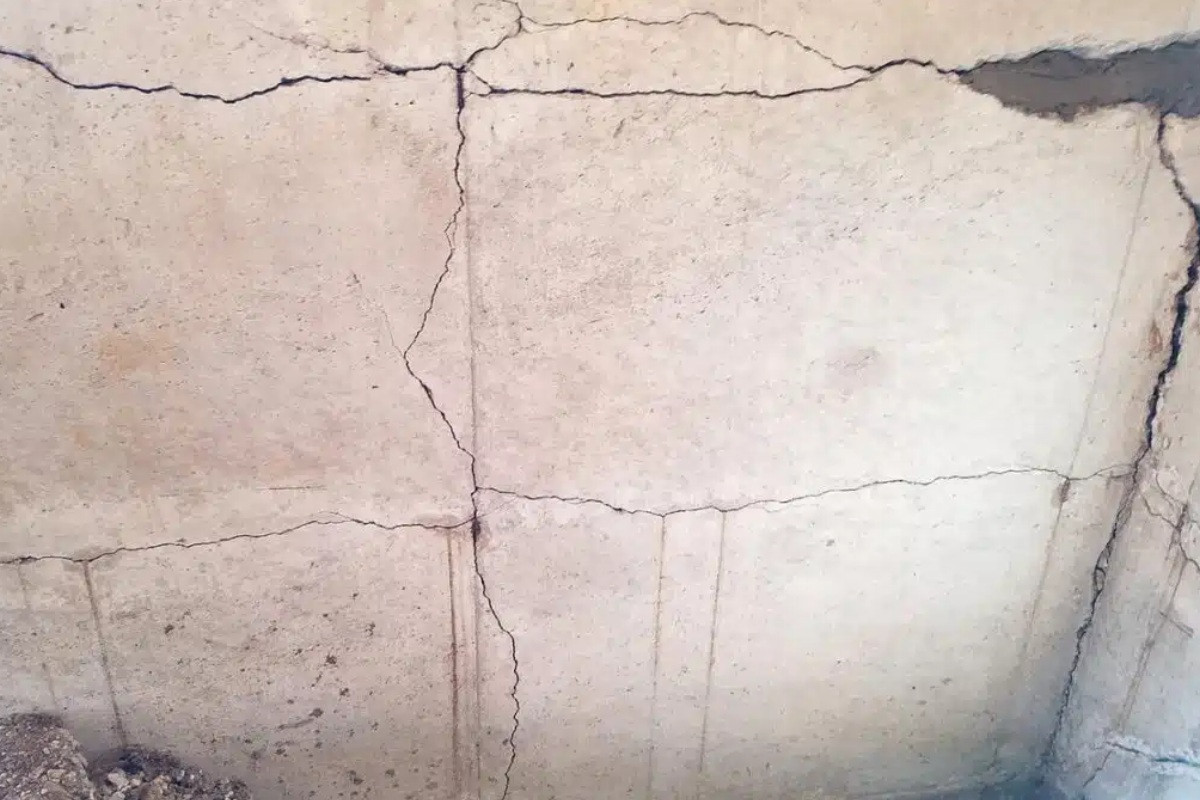
If the crack is wider at the top and tighter at the bottom, like a Pac-Man mouth, there is a good chance you have a structural issue. The widening shape shows the top of the crack is opening up as the bottom stays anchored in place. That pattern of uneven movement is what makes a crack structural rather than cosmetic.
The Straight Up-and-Down Seam
A crack that runs straight up and down as a clean seam, with no flaring at the top or bottom, is usually a different story. That kind of seam crack can typically be sealed with a simple injection from the inside. It is all in the elevations. The top and bottom of the crack reveal exactly what the foundation is doing.
Key Takeaway: Shape comes first. A widening top points to a structural issue. A clean, straight seam usually does not.
Other Signs of a Structural Foundation Crack
The shape of the crack is the first clue. The rest of your home gives you the second one. When a foundation is moving, the symptoms travel up through the house, and they show up in places most homeowners walk past every day.
Sticking Doors and Windows
If doors and windows have started sticking or refusing to close cleanly, that often points to foundation movement. The frames around them have shifted along with the wall below. Sticking doors alone do not confirm a structural issue, but paired with a foundation crack, they strongly suggest one.
Cracks in Your Sheetrock
Cracks in your sheetrock tell a similar story. When sheetrock cracks show up at the same time as a crack in the foundation, you are almost certainly dealing with a structural issue rather than a cosmetic one. The sheetrock is following the movement of the wall.
Pro Tip: Before assuming the worst, walk through your home and check the doors, windows, and sheetrock. If those are all clean, the crack you are worried about is likely not structural.
Need expert help with a structural foundation crack? Contact Foundation 1 for a free consultation.
When a Foundation Crack is Just a Stress Fracture
Not every crack means trouble. The same diagnostic clues that flag a structural problem can also confirm that a crack is harmless.
Signs You Have a Stress Fracture
If a crack is leaking but you have no sticking doors and no cracks in the sheetrock, chances are it is just a stress fracture. Stress fractures are common, easily repaired, and not a sign of structural failure.
How a Stress Fracture Compares to a Structural Foundation Crack
The difference between the two comes down to what else is happening. A stress fracture is a hairline crack with no other symptoms. A structural foundation crack usually shows up with the widening Pac-Man pattern, sticking doors, sheetrock cracks, or any combination of those three.
Get a Professional Inspection
Telling the difference between a stress fracture and a structural issue takes a trained eye. The same crack can mean different things depending on what is happening around it, and a brief visual check by an inspector usually clears up the question quickly.
Contact Foundation 1 today for a free inspection, and our team will tell you exactly whether you are dealing with a stress fracture or a true structural foundation crack.