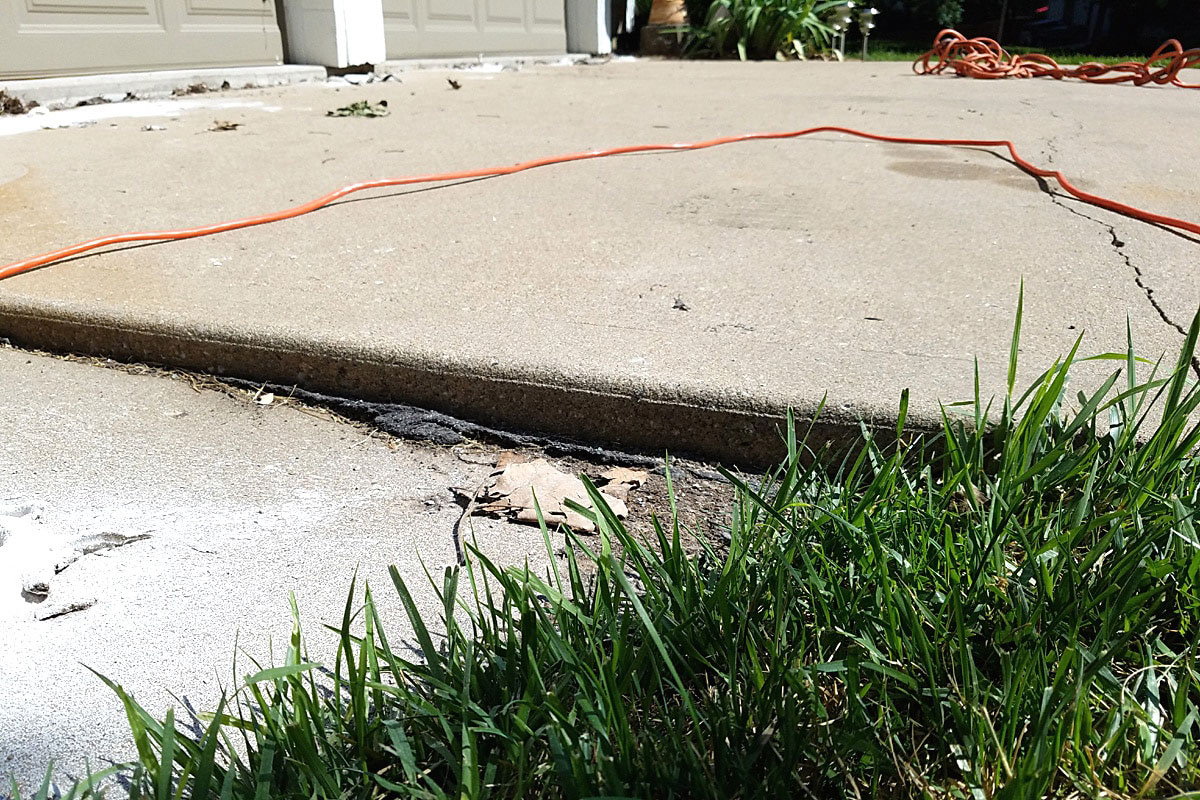
When you see your driveway sink again after mudjacking, it usually means the cause under the slab was never fixed. The lift corrected the surface. Water, weak fill, failing slurry, or shifting clay kept working underneath and slowly opened new voids.
A longer-lasting fix starts with finding which of these is at work on your property. For many Kansas City driveways, that means correcting drainage first, then re-leveling with lightweight polyurethane foam.
What Mudjacking Does (and What It Leaves Behind)
Mudjacking pumps a slurry, usually a mix of soil, sand, water, and cement, through holes roughly 1.5 to 2.5 inches wide. The slurry fills the empty space under the slab, and pressure raises the concrete back to level.
That process fills the gap. It does nothing about why the gap formed. If water, weak fill, or shifting clay created the void, those forces keep working after the crew leaves. Because the underlying cause is still there, the soil can keep settling below a mudjacked area after the job is done.
Key Takeaway: Mudjacking treats the symptom. The cause underneath needs its own repair, or the slab can settle again.
Why Does a Driveway Sink Again After Mudjacking?
1. Water is Still Washing Out the Soil
Downspouts that empty onto the driveway, poor grading, and open joints let water run under the slab. That water carries soil away and opens new voids next to the old fill.
Look for sand or dirt washing out along the edges, especially where downspouts empty.
2. The Slurry Added Weight to Weak Soil
Mudjacking slurry typically weighs about 100 pounds per cubic foot or more. Loose backfill, common around newer homes and garage aprons, can compress under that extra load. This often shows up as even, gradual sinking within a few years.
3. The Slurry Broke Down Over Time
Some slurry mixes shrink as they cure. The material may also absorb water or wash out if water keeps flowing under the slab. Either way, small gaps form between the fill and the concrete, and the slab settles into them.
4. The Voids Were Never Fully Filled
Slurry may not reach every pocket under the slab, especially when injection holes are spaced far apart. A slab that settles within months, or sounds hollow when tapped, can point to this.
5. Kansas City Clay Keeps Moving
Much of the KC metro sits on expansive clay that swells when wet and shrinks in dry weather. Our wet springs and hot summers keep that soil moving every year. A lift alone may not hold a slab steady through those cycles. You can look up your lot’s soil type on the USDA Web Soil Survey.
6. Freeze-Thaw Damage and a Weak Base
Water that seeps into cracks freezes, expands, and loosens the base over many winters. A thin or poorly compacted base from the original construction speeds this up. The American Concrete Institute notes that keeping concrete from staying saturated helps limit freeze-thaw damage to the slab itself.
Pro Tip: Walk your driveway right after a heavy rain. Spots where water pools or runs under the edge are often where the next void is forming.
How to Tell Which Problem You Have
Where Did Your Driveway Sink Again After Mudjacking?
The spot where the slab dropped is a useful clue:
- Near a downspout or along one edge: often drainage
- Right next to the house or garage: often loose backfill
- New cracks near old injection holes: possible slab stress or fill problems
When Did It Start Sinking?
| Timing or Pattern | Common Cause |
| Within the first year | Voids not fully filled |
| 1 to 3 years, sinking evenly | Slurry weight on weak fill |
| Rises and drops with the seasons | Expansive clay |
| 3+ years, with crumbling joints | Slurry breakdown, freeze-thaw damage, or a weak base |
| Any time, with soil washout | Drainage problems |
Key Takeaway: Many driveways have more than one cause. A repair is more likely to last when it addresses each one.
Not sure what’s happening under your slab? Contact Foundation 1 for a free inspection. Our evaluators look for the cause before recommending any repair.
Can You Mudjack the Same Driveway Twice?
Yes, it’s possible. A second round adds more heavy material to soil that already gave way once.
When a Second Round Might Work
If the first job simply missed a void and the soil underneath is firm, re-mudjacking can hold. If the problem is weak soil, water, or clay movement, the sinking usually repeats.
Why We Often Recommend Polyjacking Instead
| Feature | Mudjacking | Polyjacking |
| Material weight | Around 100 lb per cubic foot | About 2 to 4 lb per cubic foot |
| Hole size | Roughly 1.5 to 2.5 inches | About 5/8 inch |
| Water resistance | Can absorb water and erode | Resists water absorption |
| Ready to use | Typically 24 to 72 hours | Often within about 30 minutes |
Figures are typical ranges and vary by product, soil, and job conditions.
Polyjacking usually costs more upfront. Because it adds so little weight, it can be the better long-term choice over weak fill. On expansive clay, it works best paired with drainage that keeps soil moisture steady, since no lifting material can stop clay from moving on its own.
How We Fix a Driveway That Keeps Sinking
Step 1: Stop the Water
We start with drainage, because lifting a slab over wet, eroding soil only buys time. Common fixes include:
- Extending downspouts or adding new gutters
- Regrading soil and improving drainage so water flows away from the driveway
- Installing a French drain where water collects
Step 2: Lift with Polyurethane Foam
Our crew injects lightweight foam through small holes. It expands to fill voids, lifts the slab, and adds very little weight to the soil.
Step 3: Seal Joints and Cracks
Sealing joints and cracks helps keep rain and snowmelt away from the base, which protects the lift over time.
When Replacement or Piers Make More Sense
We may recommend other options if:
- The slab is broken into many pieces or crumbling (concrete replacement)
- Your garage floor or foundation is also moving, which can signal a deeper soil problem (foundation piers)
Pro Tip: Take dated photos of your driveway each spring and fall. Seeing how the gaps change helps an evaluator tell seasonal clay movement from steady settling.
Questions to Ask Before You Hire Anyone
Before anyone touches your driveway again, ask:
- What caused my slab to sink?
- Will you address drainage, or only lift the concrete?
- What material do you use, and why is it right for my soil?
- What does the warranty cover, and does it transfer if I sell?
- Are you licensed and insured?
Get the Cause Fixed, Not Just the Slab
Foundation 1 has served Kansas City homeowners on both sides of the state line since 2001. Our experienced evaluators look at drainage, soil conditions, and the slab itself, then explain your options in plain language. We’re licensed and insured, and warranty coverage depends on the repair, so we’ll explain what applies to yours.
Contact us to schedule your free inspection. Financing is available. We’ll look for what’s causing the problem and recommend a repair that addresses it, giving your driveway the best chance of staying level.